
A cheese board does not need to be complicated to feel special. With a few good cheeses, something crisp to scoop with, and three small bowls of chutney, a plain tea-time table becomes a table people gather around. The chutneys do most of the work, because each one brings a different flavour to the board, and guests can choose what they like best.
That is the simplest answer to the question of what chutneys go on a cheese board. Put out one sweet and deep flavour, one tangy flavour, and one mellow flavour, and almost every cheese and cracker on the board will have a partner. You do not need a long list of extras, and you do not need to serve a full meal. Tea, a board, and time to sit together are enough.
This board uses all three ARONISA chutneys, so it is also a gentle way to try them side by side. Taste each one on its own first, then try it with cheese, then with a cracker, and notice how the same chutney can feel quite different in each combination.
What goes on a good cheese board
A good board has contrast. Something soft and something firm, something plain and something crisp, something salty and something sweet. Cheese provides the salty, creamy base, while crackers and paratha crisps give guests something to hold and scoop with. Fresh fruit, a few nuts, and some herbs can finish the board, but they are extras, not the main event.
Keep the board small enough that it looks generous without looking crowded. Three cheeses are plenty for tea time. Choose one soft cheese, one firm cheese, and one cheese with a little more character, and cut them into pieces that are easy to pick up. Leave space for the three chutney bowls, because the chutneys are meant to be reached from every side of the table.
Three chutneys, three different jobs
Sweet and deep: Alu Bukhara Ki Chutney
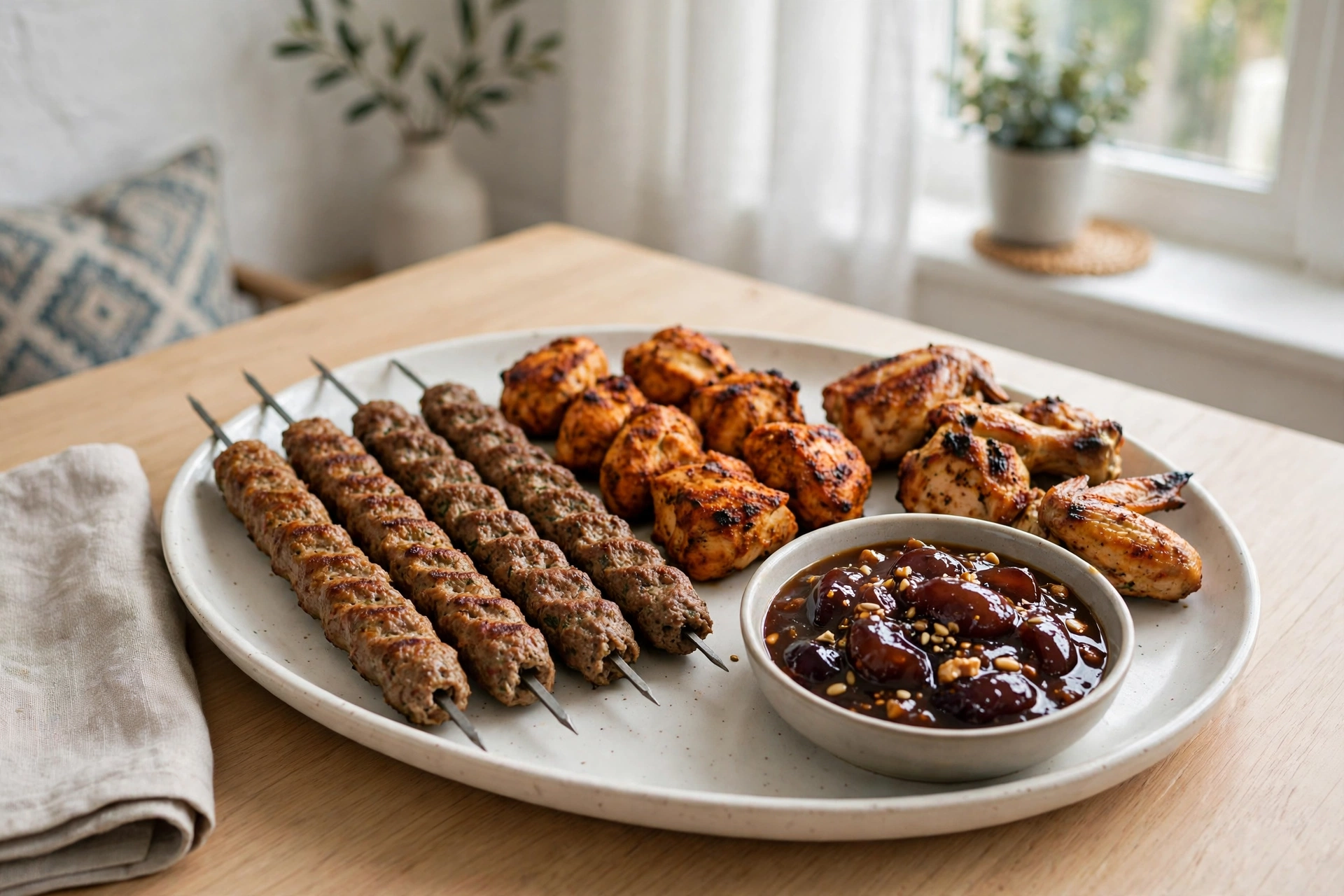
ARONISA Alu Bukhara Ki Chutney, made with plum, is sweet, tangy and deep. On a cheese board, it pairs best with firm cheese and with paratha crisps, where its depth stands up to salt and crunch. A small spoonful is enough. Spread it thinly, or place a little beside a piece of cheese, and let guests add more if they want it. It also works well beside grilled chicken or kebabs, so any leftover bowl from a weekend gathering can find a second use at tea time.
Tangy and bright: Imli Ki Chutney
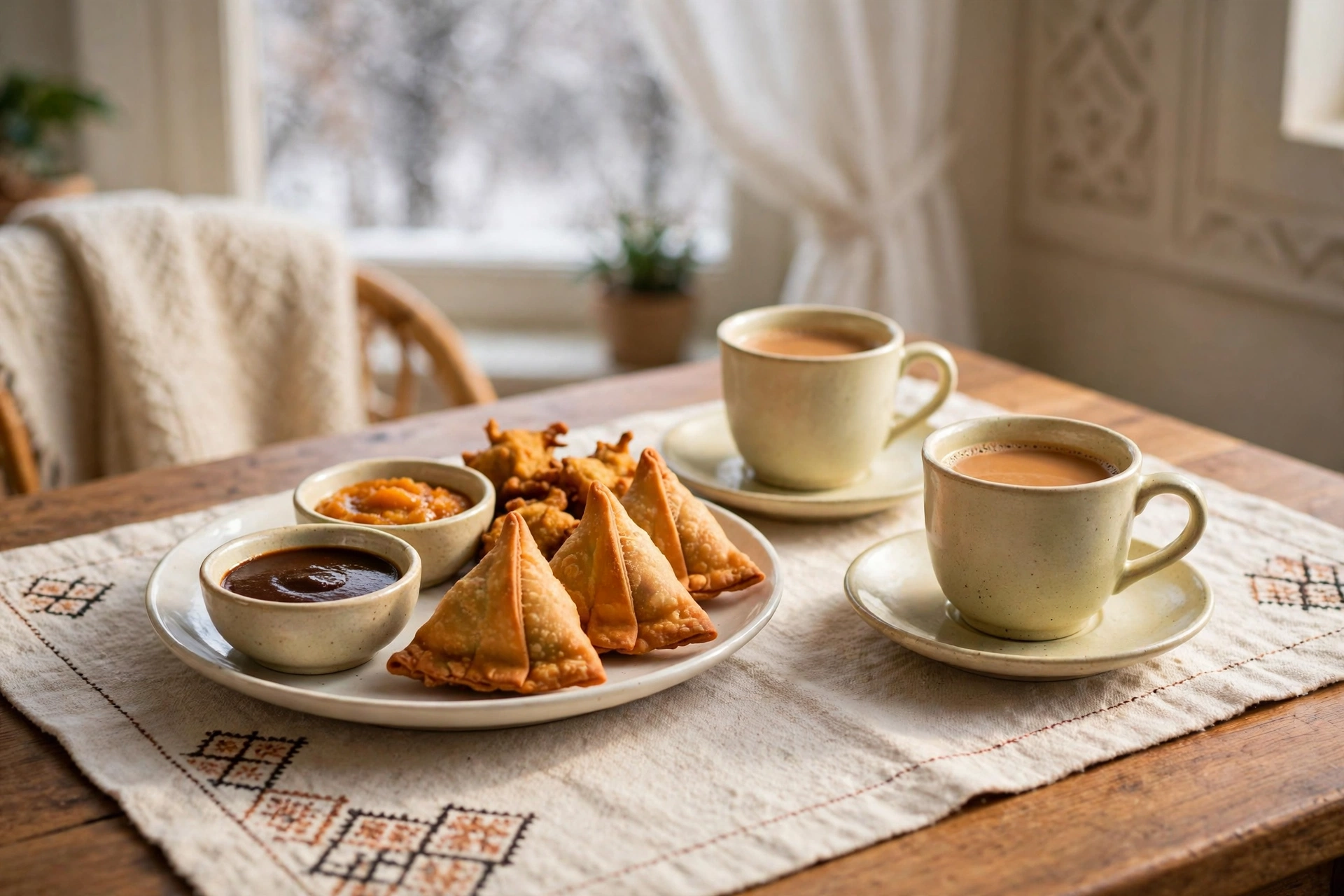
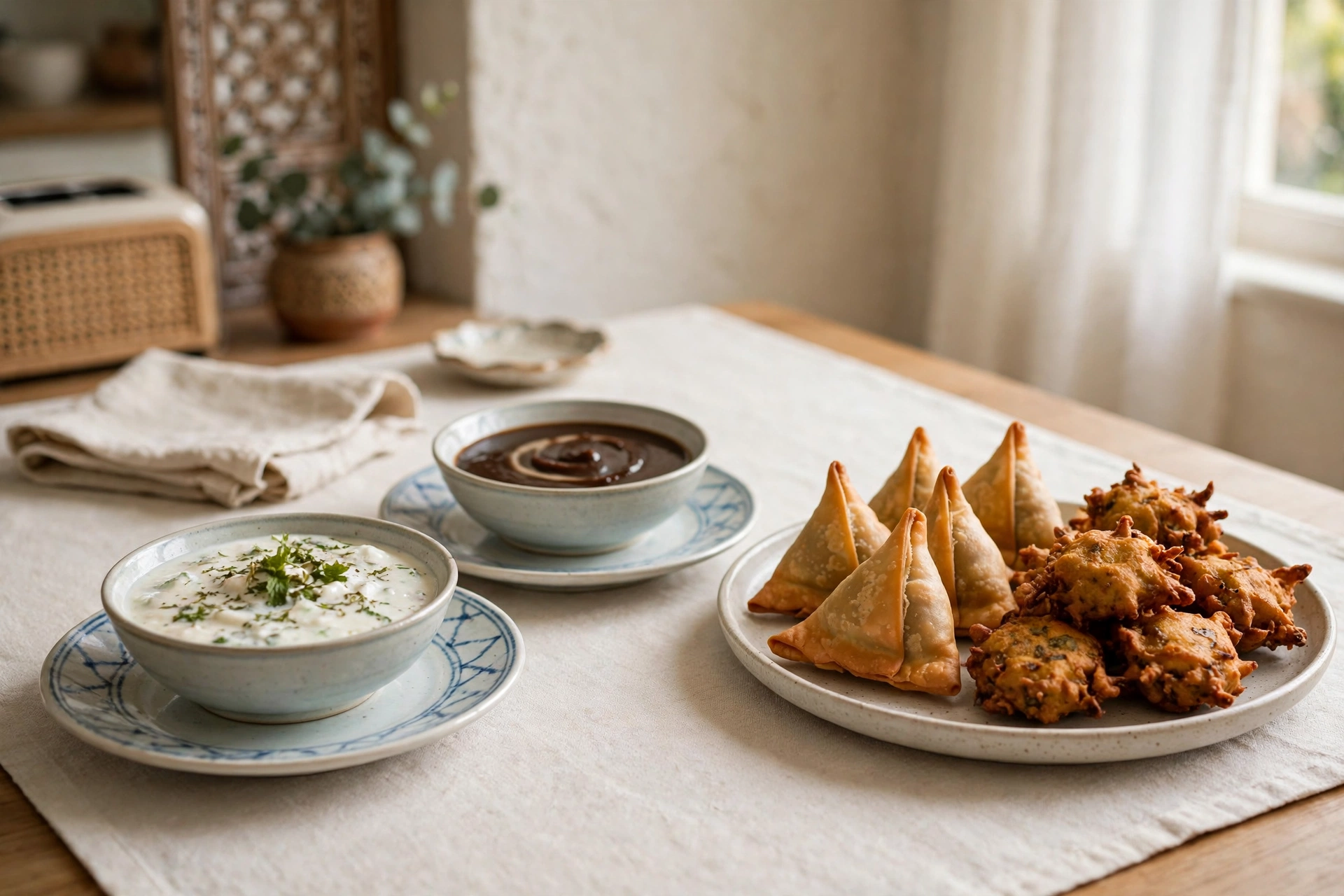
Imli Ki Chutney, made with tamarind, is tangy, sweet and rich, and it brings brightness to the board. It is the flavour to reach for with richer cheese, because its tang cuts through creaminess and keeps the bite feeling light. It also pairs well with fried snacks and chaat, so if your tea-time table includes samosas or pakoras, this bowl will disappear first. Serve it in a small bowl with its own spoon, and encourage guests to drizzle, rather than pour, so the cheese still leads the flavour.
Sweet and mellow: Khubani Ki Chutney
ARONISA Khubani Ki Chutney, made with apricot, is sweet, mellow and fruity. This is the gentlest flavour on the board, and it suits soft cheese, warm paratha, and plain crackers best. Spread it thinly inside a small roll, or serve it alongside a warm paratha for guests who prefer a quieter taste. It is also a good choice for children at the table, and for guests who are trying a chutney board for the first time, because it is easy to enjoy without being overpowering.
Building the board, step by step
Start with the board itself, then the bowls, then the cheese, then the crisp things, and finally the small extras. This order keeps the board balanced and easy to look at.
- Place three small bowls on the board, one for each chutney, with a separate spoon for each bowl.
- Add the cheeses, cut into easy pieces, with space between them so guests can reach each one.
- Add crackers and paratha crisps in two or three small groups, rather than in one large pile.
- Add a few fresh touches, such as grapes, sliced apple, or fresh coriander, in the gaps.
- Put the board in the middle of the table, with small plates and napkins nearby, so guests can help themselves.
If you are short on time, the board can be ready in the time it takes to make tea. The chutneys are already made, the cheese only needs cutting, and the crackers only need arranging. That is part of the appeal of a chutney board at tea time: it looks thoughtful, but it does not ask the host to cook a second meal.
Tea-time pairings that work
Tea and chutney boards go together because tea is warm and plain, and the board is varied and flavourful. Serve the tea in small cups, so guests can refill easily, and keep the board within reach of every chair. A simple fruit cake or a plate of plain biscuits can sit beside the board, but they are not required. The board itself is the centre of the table.
For a larger gathering, add warm parathas and plain yoghurt. The parathas pair well with the mellow apricot chutney, while the yoghurt can be stirred with plum chutney to make a simple dip.
The ARONISA Trio is the easiest way to put this board together, because it gives you one jar of each flavour, for a BBQ, a chaat night, or a dawat table later in the week.
FAQ
What chutneys go on a cheese board? A sweet and deep plum chutney, a tangy tamarind chutney, and a mellow apricot chutney work well together, because each one suits different cheeses and crackers.
Do I need all three chutneys for a small tea-time board? No, but three bowls make the board more interesting, and guests can choose their favourite flavour. One bowl is enough for a very small table.
What should I serve with a chutney cheese board? Crackers, paratha crisps, cheese, and tea are enough. Warm parathas, fresh fruit, and plain yoghurt are useful extras for a larger group.
A friendly next step
Try this board at your next tea time, and see which chutney your guests reach for first. ARONISA chutneys are delivered across Pakistan, and you can find the latest details on the shop page. Start with the Trio, set out three small bowls, and let the board do the talking.