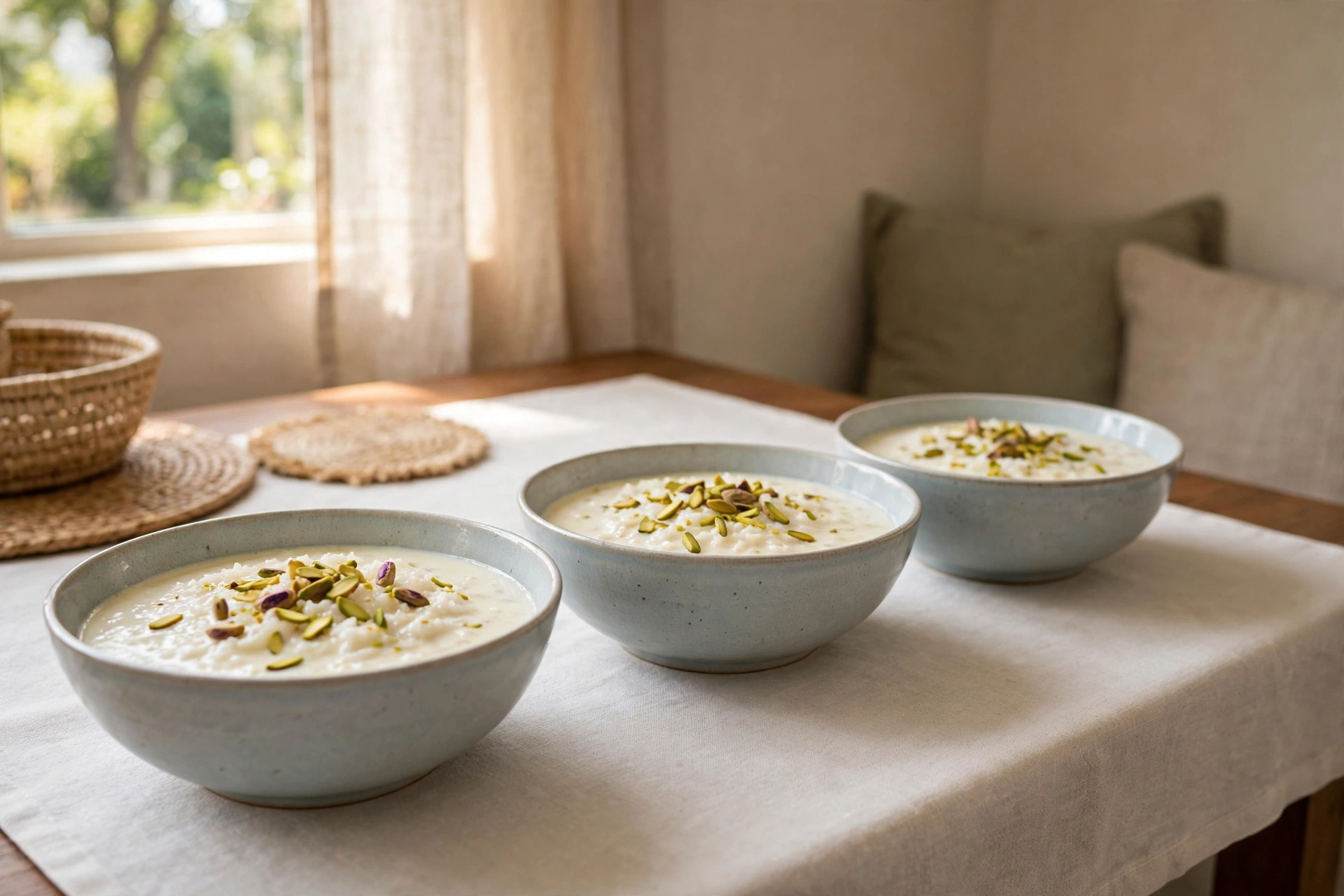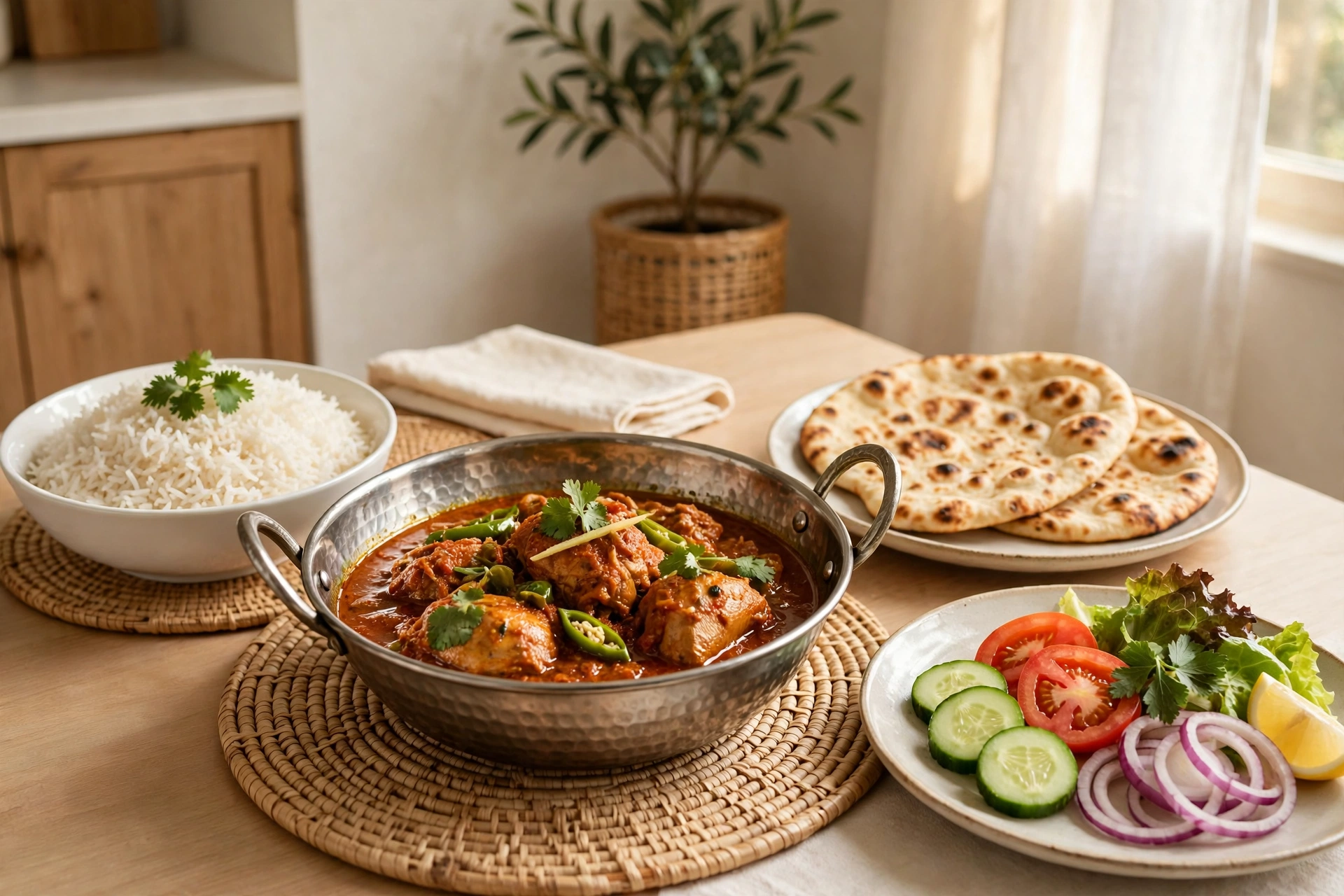

A dawat should feel generous, warm and joyful. It should not feel like a race to cook ten dishes, or a table so crowded that no one can enjoy any of them. Many hosts in Pakistan love to cook a lot for guests, but too much food, too many flavours, and too much last-minute work can make the day stressful, for the host and for the guests.
This post explains how to plan a dawat menu without overload: how to choose a balanced set of dishes, how to time the cooking, and how to set a calm table, so you can enjoy your guests as much as they enjoy the food.
What overload looks like
Overload is not just too much food. It is also too many similar dishes, too many heavy dishes, and too much work at the same time.
For example, a menu with biryani, pulao, karahi, and a creamy curry, plus fried snacks, plus three desserts, is a lot for one meal. Guests cannot taste everything, the host cannot cook everything well, and the table becomes crowded and confusing.
Overload also happens when every dish needs the stove at the same time, or when nothing can be made ahead. Then the host is stuck in the kitchen while guests are in the other room, and the meal feels rushed, even if the food is good.
Start with a balanced structure, not a long list
Instead of listing every dish you love, start with a simple structure, and choose one good dish for each part.
A balanced dawat menu usually has:
- One main dish that is the star, such as biryani, karahi, or a roast.
- One second main or supporting dish, such as a lighter curry, daal, or vegetable dish.
- One bread or rice accompaniment, if it is not already part of the main dish.
- One fresh element, such as a salad, raita, or chutney.
- One dessert, or two small desserts at most.
- Drinks, such as water, a lassi, or a simple sharbat, and tea at the end.
This structure feels generous, because each part is covered, but it is not overloaded, because there are not three versions of the same thing.
Choose dishes that work together
Balance heavy and light
If your main dish is rich, such as a creamy karahi or a biryani with meat, pair it with something lighter, such as a fresh salad, a simple raita, or a vegetable dish. If your main is lighter, such as a daal or a vegetable curry, you can add a richer side, such as a fried snack or a creamy dessert.
Balance is not just about taste. It is also about how guests feel after the meal. A menu with only heavy dishes can feel tiring. A menu with a mix feels satisfying, without being too much.
Balance flavours
Avoid choosing dishes that all taste the same. If one dish is spicy, make another mild. If one is creamy, make another fresh and tangy. Chutneys, salads, and raita are useful here, because they add freshness and contrast, without adding a whole new main dish.
For example, ARONISA chutneys can add a bright, tangy note to a rich dawat table, without requiring extra cooking. A small bowl of chutney beside a karahi or biryani gives guests a choice, and it lightens the meal.
Balance textures
Think about texture, too. A menu with only soft dishes, such as curry, rice, and dessert, can feel monotonous. Add something crisp, such as a salad, a papad, or a fresh vegetable, so the meal has variety.
Plan for the number of guests
A common mistake is to cook for more guests than are coming, just in case. It is kind to have enough food, but cooking far too much creates waste, stress, and a crowded table.
As a guide, plan generous portions for the number of guests you have confirmed, plus a small buffer, not double. For a main dish, plan enough for everyone to have a good portion, with a little left over, not enough for a second full meal.
For desserts, plan smaller portions, because guests will have already eaten a main meal. A small bowl of kheer or a small slice of cake is often enough, and it feels elegant, not stingy, when the main meal was generous.
Make a cooking timeline
A timeline is the most useful tool for a calm dawat. Work backwards from serving time, and write down what needs to happen when.
The day before
Do as much as you can the day before. Marinate meat, chop vegetables, make chutneys or raita, and make desserts that keep well, such as kheer. Set the table, if you can, so the day of the dawat is not spent on setting up.
Making ahead does not mean the food is less fresh. Many dishes, such as curries, daal, and kheer, actually taste better the next day, when flavours have melded.
The morning of the dawat
On the day, start with dishes that take longest, such as a slow-cooked curry or biryani. Then prepare fresh elements, such as salad, closer to serving time, so they stay crisp.
Keep a simple list, with times, so you do not have to remember everything in your head. Cross items off as you finish them, so you can see progress, and so you do not forget a dish.
The last hour
In the last hour, focus on finishing, not starting new dishes. Reheat, garnish, and plate. Warm bread, make tea, and set out drinks. This is also the time to change, freshen up, and welcome guests, not to start a new complicated dish.
Set a calm table
A calm table helps guests relax and enjoy the food. You do not need expensive crockery or elaborate decoration. A clean tablecloth, enough space for each guest, and serving dishes that are not too crowded, are enough.
Serve food in a way that is easy for guests. If you are serving family-style, place main dishes in the centre, with serving spoons, and keep salads and chutneys within reach. If you are plating, keep portions neat, and do not overload the plate.
Leave space for water glasses, and for guests to put down a plate comfortably. A table that is too full feels stressful, even if the food is excellent.
What to do if you have too many ideas
If you have a long list of dishes you want to cook, do not try to cook them all at one dawat. Save some for the next gathering. That gives you a reason to invite guests again, and it means each dish gets the attention it deserves.
You can also ask a family member to bring one dish, such as a dessert or salad. That is not a failure. It is a way to share the work, and to include others in the celebration.
Learning menu planning in a class
If you want to learn menu planning, timing, and hosting with hands-on practice, ARONISA’s Complete Kitchen Course teaches these skills, from everyday cooking to planning for guests.
For a wider range of skills, explore the ARONISA cooking and baking classes.
FAQs
How many dishes should a dawat have?
For most family dawats, one main dish, one supporting dish, one bread or rice accompaniment, one fresh element, and one dessert is enough. It feels generous, without being overloaded. Add a second main only if you have many guests, or if you have dietary needs to cover.
How far ahead can I prepare?
Many dishes can be prepared the day before, including marinades, chopped vegetables, chutneys, raita, and desserts such as kheer. Curries and daal also keep well overnight. Prepare fresh salads on the day, close to serving time.
What if guests have different dietary needs?
Choose a menu with a mix, such as one meat main and one vegetable or daal dish, so everyone has a good option. Label dishes simply, or tell guests what is in each dish, so they can choose comfortably.
How do I avoid spending the whole dawat in the kitchen?
Make as much as possible ahead, use a timeline, and finish cooking before guests arrive, where possible. In the last hour, focus on reheating and garnishing, not on starting new dishes, so you can welcome guests and enjoy the meal.
Plan your next dawat calmly
For your next dawat, start with a simple structure, balance heavy and light, fresh and rich, and make a timeline that lets you finish before guests arrive. Set a calm table, serve generous but not overloaded portions, and enjoy your guests. To learn menu planning hands-on, explore the Complete Kitchen Course.