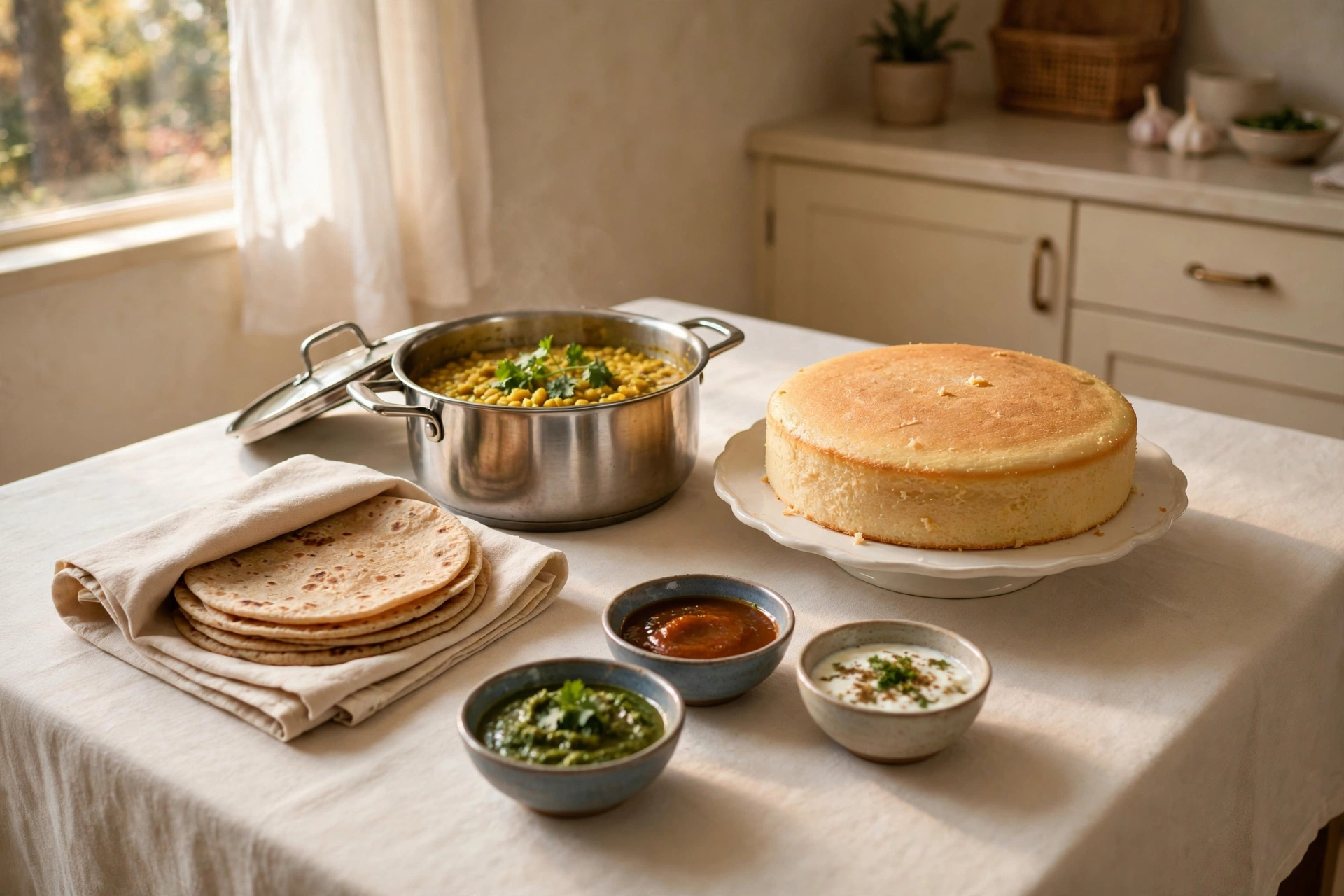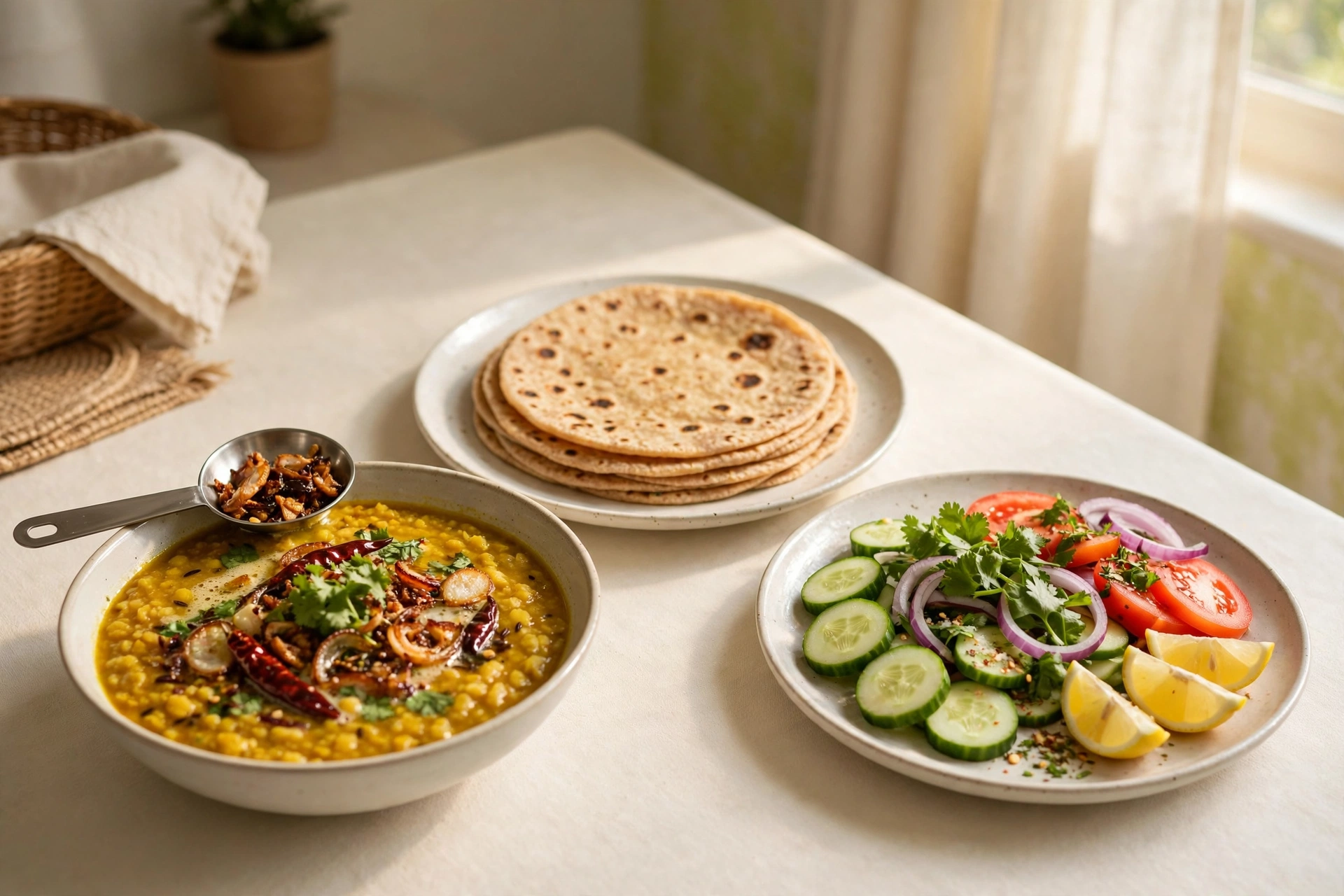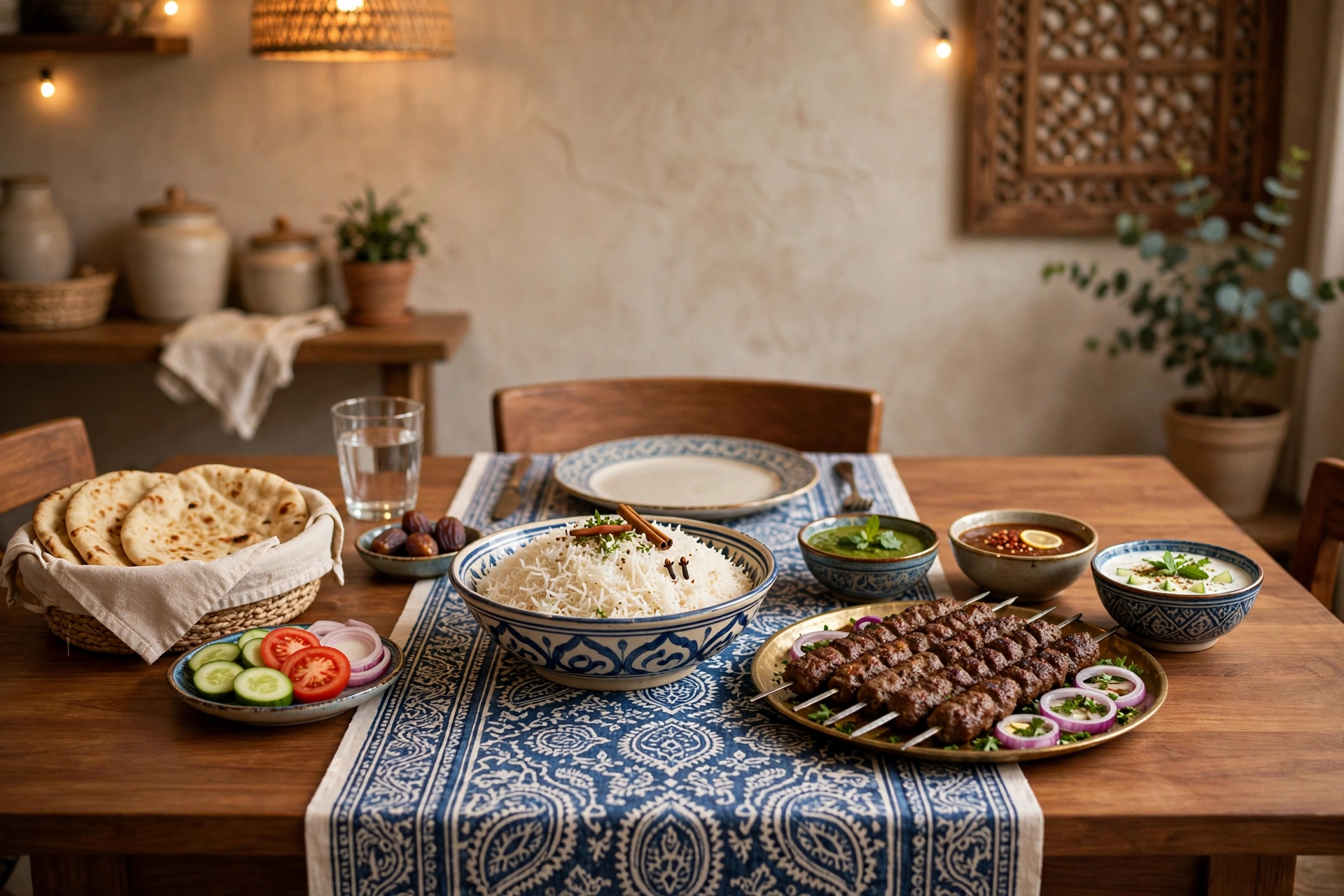

Why learn to cook in person? Because cooking is a hands-on skill, and hands-on skills are learned by doing, watching, and asking questions in the moment. A video can show you a technique, but it cannot watch your hands, correct your grip, or tell you why your dough feels different today. In person, someone can.
That difference matters most for the skills home cooks actually struggle with: rolling a round roti, judging when a tawa is hot enough, smoothing frosting without dragging crumbs, or timing a dawat so food arrives warm and the host is calm. These are small, physical judgements, and they are learned fastest when you can see them, try them, and get feedback straight away.
ARONISA classes are in person in Rawalpindi and Islamabad, hands-on, and in small batches. This guide explains why that way of learning suits home cooks, what it feels like in practice, and who it helps most.
You learn by doing, not just by watching
In a hands-on class, you cook, not just watch someone else cook. You knead dough, roll rotis, stir daal, frost a cake, and plate a dish, while guidance is available in the room. If a roti tears, you can ask why, straight away, and try again with that advice fresh in your mind. If frosting drags crumbs, you can see the crumb coat method done in front of you, then do it yourself.
That immediate feedback is hard to get from a screen. A video cannot tell you that your dough is a little dry, or that your scraper is pressing too hard, or that your tawa needs a little more heat. In person, those small corrections happen in seconds, and they stay with you because you felt the difference yourself.
Small batches help here too. In a small group, you get time to practise, time to ask, and time to see other learners’ work as well. Cooking alongside others, at a similar level, is encouraging: you see that everyone struggles with the same steps at first, and you see how quickly those steps improve with practice.
You learn timing, confidence, and hosting together
Cooking in person is not only about recipes. It is about timing a meal, planning a menu, and hosting with confidence — skills that are hard to learn alone. In a class, you can practise dawat menu planning, plating, and cooking for a crowd, with guidance on what to prepare in advance, what to cook fresh, and how to serve a table well.
Confidence is another benefit. Many home cooks already know a lot, but they doubt themselves when cooking for guests. Cooking in a class, with others, and succeeding at a dish you found difficult, builds confidence that carries into your own kitchen. You return home not just with a recipe, but with a memory of doing it well, and that memory makes you more likely to try it again.
In-person learning also builds a sense of community. You meet other home cooks in Rawalpindi and Islamabad, share tips, and learn from each other’s kitchens and families. Food is, after all, a shared activity, and learning it together feels natural in a way that learning alone does not.
Who in-person learning suits best
In-person classes suit beginners who want a strong foundation, home cooks who want to improve specific skills such as rotis, daal, or frosting, and people who want to host dawats with confidence. They also suit newly married couples starting a kitchen together, and parents who want to bake for birthdays at home, because the skills are practical and immediately useful.
They suit anyone who learns by doing, rather than by reading alone. If you have watched videos and still feel unsure about a technique, trying it in person, with guidance, is often the step that makes it click. You do not need to be an expert to join — you need to be willing to practise, ask questions, and cook alongside others.
To join, go to the ARONISA courses page and register for a course. There is no online payment — you register on the website and ARONISA calls to confirm the batch, timing, and fee. Classes are in person in Rawalpindi and Islamabad, hands-on, and in small batches.
FAQ
Is in-person learning better than learning from videos?
For hands-on skills, yes, in the sense that you get immediate feedback on your hands, timing, and technique, which a video cannot give. Videos are still useful for revision after a class.
Do I need experience to join a class?
No. Classes are taught step by step, hands-on, in small batches, and are suited to home cooks at different levels. Choose a course by what you want to cook.
How do I register for an ARONISA course?
Register on the website and ARONISA calls to confirm the batch, timing, and fee. There is no online payment.
A friendly next step
If there is a skill you have watched but never quite mastered, try learning it in person. One hands-on session, with real-time guidance, can turn a difficult step into a confident habit.