
How do you host a golgappay night at home? You start with crisp puris, a simple filling, and a tangy chutney, and you let guests fill their own. Golgappay, also known as gol gappay, are small, crisp, hollow puris that are filled at the table, usually with potatoes, chickpeas, onion, and chutney. They are street food at heart, but they work beautifully at home, because the fun is in the filling, not in fancy cooking.
A golgappay night is also a good way to bring people together. Unlike a formal dinner, where everyone waits for the main dish, a golgappay table invites guests to stand, chat, fill, and eat in whatever order they like. Children enjoy filling their own puris, adults enjoy comparing combinations, and the host can join in instead of serving course after course.
This post sets out a simple golgappay night, with ARONISA Imli Ki Chutney as the central flavour. The chutney, made with tamarind, is tangy, sweet and rich, and it is made for chaat, including golgappay, papri chaat, and dahi bhalla. A small bowl of it, placed in the middle of the table, is enough to carry the whole evening.
What you need for a golgappay night
Keep the list short. Crisp puris are the base, and they should be kept dry and covered until serving, so they stay crisp. The filling can be as simple as boiled potatoes, boiled chickpeas, chopped onion, and fresh coriander. Add yoghurt, whisked with a pinch of salt, for guests who want a cooler, creamier filling, and add chaat masala and red chilli powder in small bowls, so guests can season their own puris.
The chutney is the flavour that ties the filling together. Imli chutney adds tang and sweetness, and it balances the plain potato and chickpea filling. Serve it in a small bowl with a spoon, so guests can drizzle a little or a lot, as they prefer. If you want a second flavour, a bowl of plain yoghurt stirred with plum chutney can sit beside it, but the tamarind bowl should remain the main bowl for golgappay.
You will also need small plates or bowls for each guest, napkins, and a little space on the table for everyone to work. Golgappay are best eaten soon after filling, because the puris soften if they sit too long, so set the table so guests can fill one or two at a time, eat them, and return for more.
Setting up the table
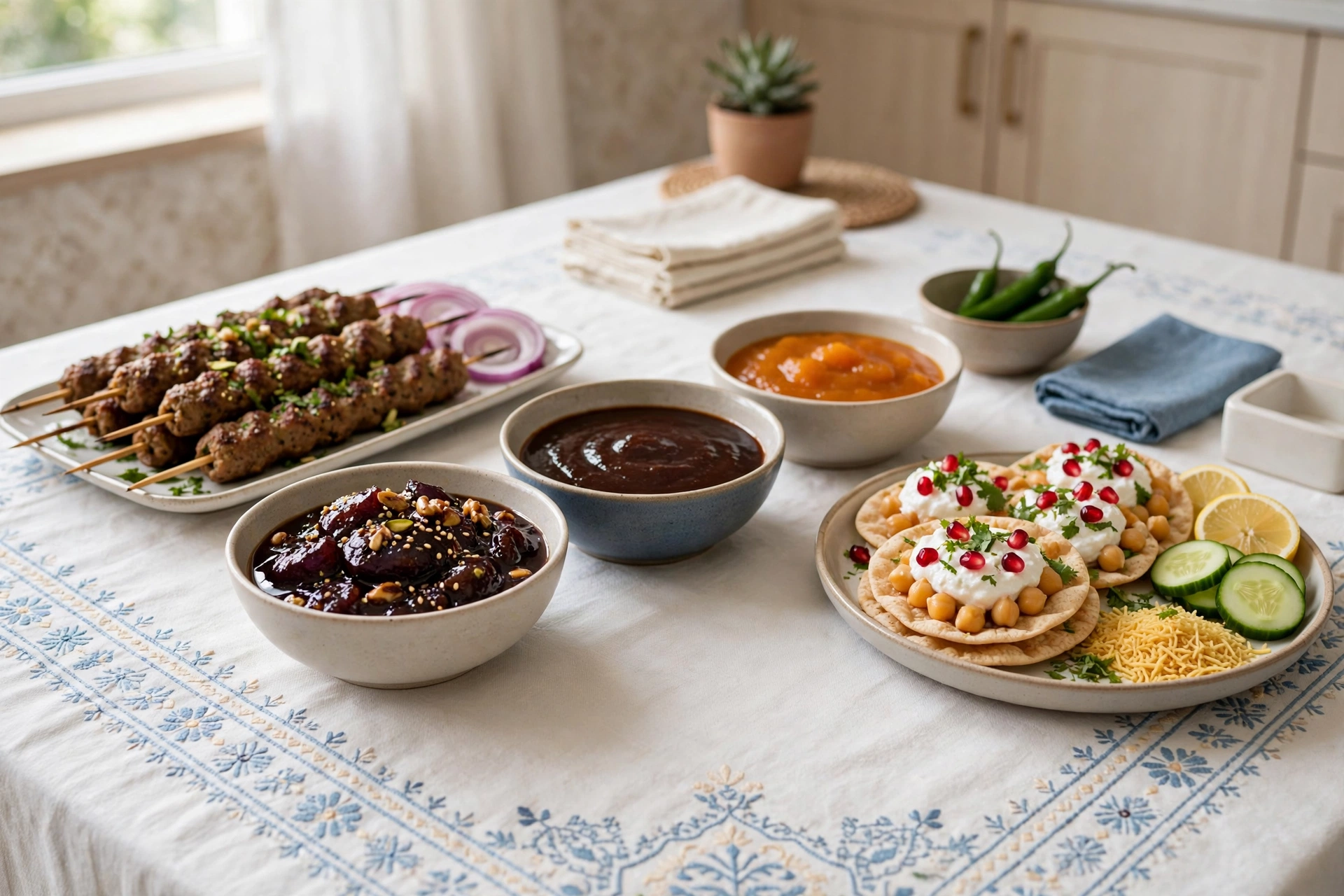
Place the puris in a large bowl or basket, covered with a clean cloth until serving. Place the filling ingredients in separate small bowls, in a row, so guests can move along the table and build their puris in order: potato and chickpeas first, then onion and coriander, then yoghurt if wanted, then chutney, then chaat masala and chilli to finish.
Put the chutney bowl in the middle of the row, not at the end, so guests do not have to reach past everything else to find it. Keep a separate spoon in each bowl, and refill small bowls rather than putting out large bowls that sit untouched. This keeps the fillings looking fresh, and it lets you judge what guests are actually enjoying.
For a family night, a low table or kitchen counter works well. For a larger gathering, two smaller tables, each with its own bowls, work better than one crowded table.
Filling golgappay, step by step
Golgappay are filled just before eating, one or two at a time. This keeps the puris crisp and lets each guest choose their own combination.
- Take a crisp puri and make a small hole in the top with a thumb or a spoon, being careful not to break the whole puri.
- Add a spoonful of potato and chickpea filling.
- Add a little chopped onion and fresh coriander.
- Spoon over a little yoghurt, if wanted, for a cooler filling.
- Drizzle with Imli chutney, a little at first, then more to taste.
- Finish with a pinch of chaat masala and chilli powder, if wanted.
- Eat soon after filling, while the puri is still crisp.
Encourage guests to try different combinations. Some will prefer more chutney and less yoghurt, while others will prefer more yoghurt and less chilli. There is no single correct golgappa, and that variety is part of the pleasure of the evening. Children may prefer a simpler filling, with potato, chickpeas, and a little chutney, while adults may enjoy a fuller, spicier version.
Making the night feel special
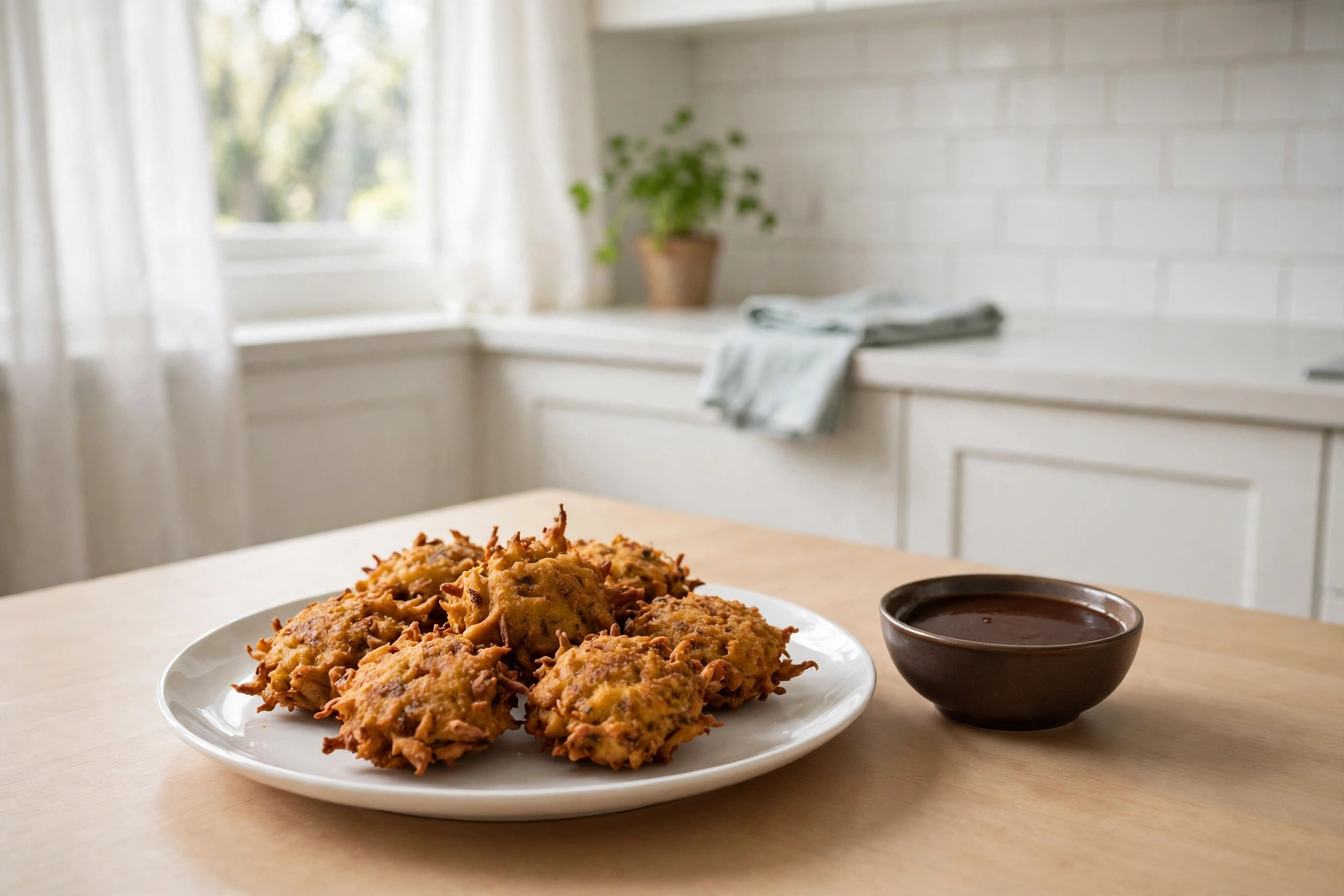
A golgappay night does not need elaborate decoration to feel special. A clean cloth, small bowls, fresh coriander, and lemon wedges are enough. Serve chai or a simple drink alongside the golgappay, and keep a plate of samosas or pakoras nearby for guests who want something extra. The golgappay themselves are the centre of the evening, and they do not need competition.
A golgappay night works because it is relaxed. Guests are not waiting for courses, the host is not stuck in the kitchen, and everyone can eat at their own pace.
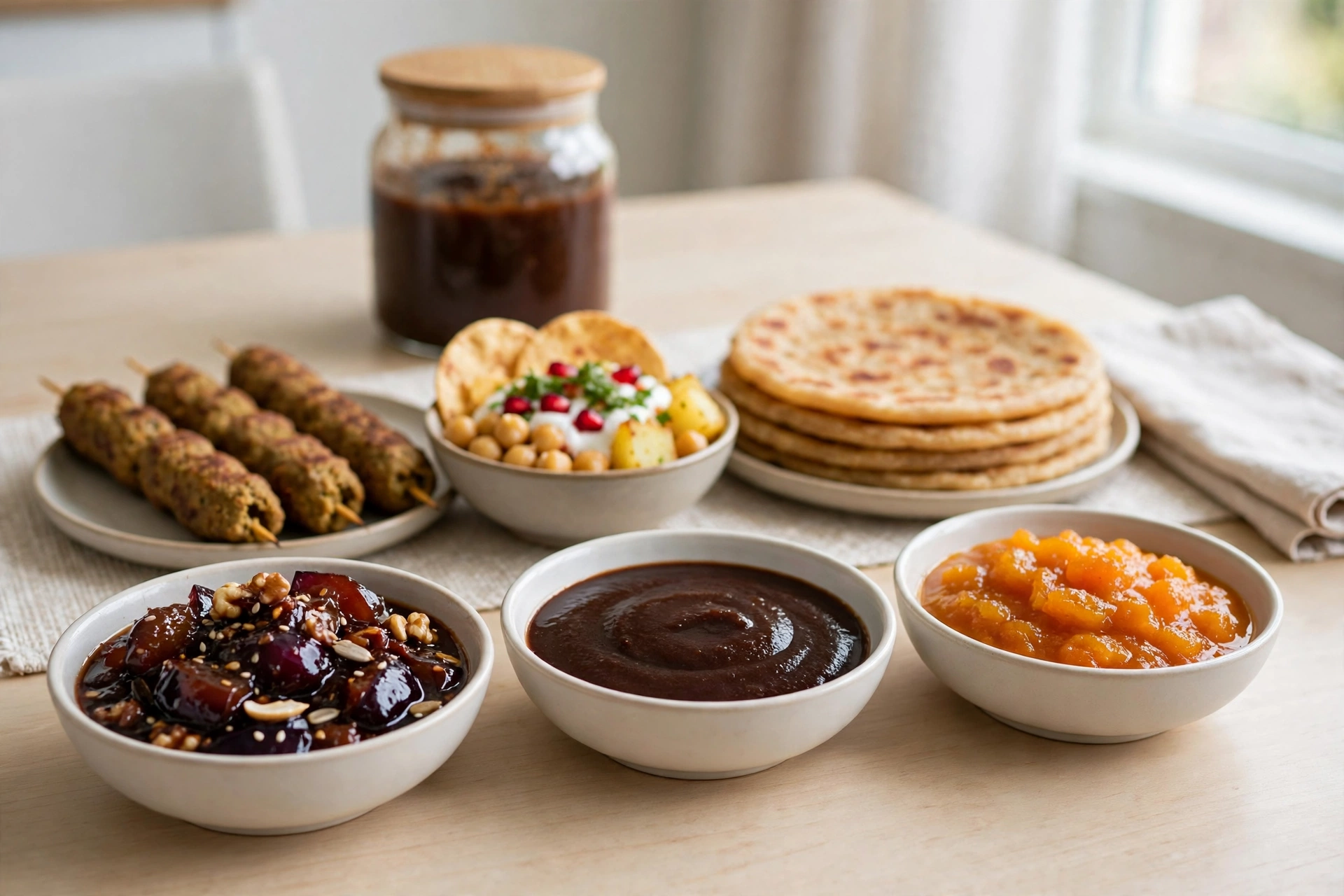
If you want to extend the evening, The ARONISA Trio can sit beside the tamarind bowl, so guests who want to try a sweet and deep plum flavour, or a mellow apricot flavour, with a roll or a paratha afterwards, have a choice. The tamarind bowl should still be the main bowl for golgappay itself, because that is where its tang works hardest.
FAQ
How do you host a golgappay night at home? Set out crisp puris, potato and chickpea filling, onion, coriander, yoghurt, and Imli chutney, and let guests fill their own puris, one or two at a time.
What chutney goes with golgappay? A tangy tamarind chutney, such as Imli Ki Chutney, pairs well with golgappay, papri chaat, and other chaat dishes.
Can children enjoy a golgappay night? Yes. Children often enjoy filling their own puris, with a simpler filling of potato, chickpeas, and a little chutney.
Do I need a large menu for a golgappay night? No. Puris, a simple filling, and chutney are enough. Samosas, pakoras, and chai are useful extras, not requirements.
A friendly next step
Try a golgappay night at home this week, with Imli chutney in the middle of the table and crisp puris ready to fill. ARONISA chutneys are delivered across Pakistan, and you can find the latest details on the shop page. Start with the tamarind chutney, and keep the Trio on hand for guests who want a choice afterwards.