
How do you fry pakoras so they stay crisp? The answer starts before the oil heats up. Pakoras soak oil when the batter is too wet, the oil is too cool, or the pakoras sit too long after frying. Fix those three habits, and the same simple batter can give you light, golden pakoras that stay crunchy long enough to reach the table.
Pakoras, also called pakoray, are one of the most loved snacks in Pakistani homes. They appear at tea time, at iftar, at rainy-day gatherings, and whenever guests arrive without warning. They are also one of the easiest snacks to get wrong, because a pakora that looks golden in the pan can turn soft on the plate. This guide sets out the habits that make the difference, step by step, without any special equipment.
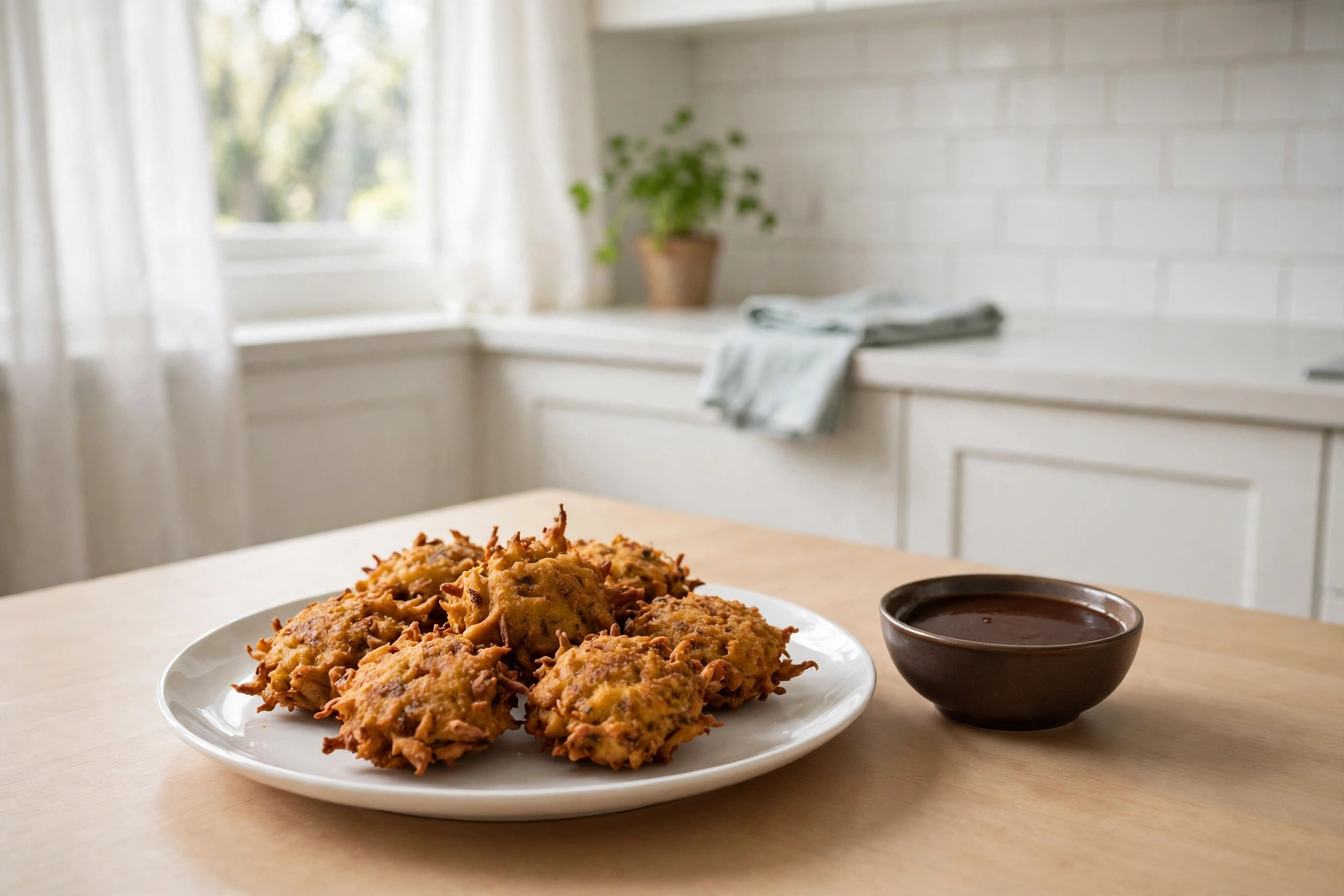
Serve the finished pakoras with a small bowl of tangy chutney. The tang lifts the fried flavour and keeps each bite feeling light, which is why ARONISA Imli Ki Chutney, made with tamarind, is such a natural partner for pakoras. It is tangy, sweet and rich, and it is made for fried snacks, samosas, and chaat.
Why pakoras soak oil
Oil soaking is usually a sign that the oil was not hot enough when the pakora went in, or that the batter held too much water. When oil is too cool, the batter absorbs oil slowly instead of crisping quickly. When batter is too wet, it takes longer to set, and more oil finds its way in during that time. Both problems are easy to fix once you know to look for them.
Crowding the pan causes a third problem. Too many pakoras at once lowers the oil temperature, and the pakoras steam each other instead of frying. They may still turn golden, but they will feel heavy. Frying in small batches takes a little longer, but it gives a much better result, and guests will notice the difference.
Finally, pakoras need to drain properly. If they sit in a closed container, or on a plate without any drainage, steam softens the crust. A wire rack, or a plate lined with paper, with space around each pakora, keeps the crust dry while the next batch fries.
Getting the batter right
A good pakora batter should coat the vegetables without dripping heavily. Start with gram flour, known as besan, and add water a little at a time, mixing as you go. The batter should fall from a spoon in a thick ribbon, not run like water. If it feels too thin, add a spoonful of flour. If it feels too thick, add water by the spoonful, not by the cup.
Salt, chilli, and spices should be mixed into the batter, not sprinkled on afterwards, so the flavour is even. Chopped onion, potato, spinach, or mixed vegetables all work well, but they should be cut evenly, so they cook at the same pace. Very wet vegetables, such as spinach that has just been washed, should be dried lightly first, because extra water in the vegetables becomes extra water in the batter.
Resting the batter for a short time helps it thicken slightly, but a long rest is not needed. Ten to fifteen minutes is enough for most home batters. If the batter looks thinner after resting, stir it gently and add a little more flour before frying.
Frying, step by step
Heat oil in a deep pan over medium heat. The oil should be hot enough that a small drop of batter sizzles and rises at once, but not so hot that it browns in seconds. If the batter sinks and sits quietly, the oil is too cool. If it darkens almost at once, the oil is too hot, and the inside will stay raw while the outside burns.
Follow these steps for each batch:
- Drop small spoonfuls of batter into the oil, leaving space between them.
- Do not stir for the first minute, so the crust can set.
- Turn the pakoras gently once, when the underside is golden.
- Fry until both sides are evenly golden and crisp, usually a few minutes per batch.
- Lift them out with a slotted spoon, and drain them on a rack or on paper, with space around each one.
- Wait for the oil to return to heat before starting the next batch.
Keep the heat steady rather than turning it up and down. If the oil starts to smoke, lower the heat and wait. If pakoras start to take much longer than the first batch, the oil may have cooled, and a short pause will help it recover.
Serving pakoras well
Pakoras are best served warm, not piping hot, so guests can taste the crunch without burning their fingers. Serve them on a wide plate, not piled high, so steam does not soften the lower layers. A small bowl of Imli chutney beside the plate is enough. Guests can dip, drizzle, or spoon the chutney over their portion, as they prefer.
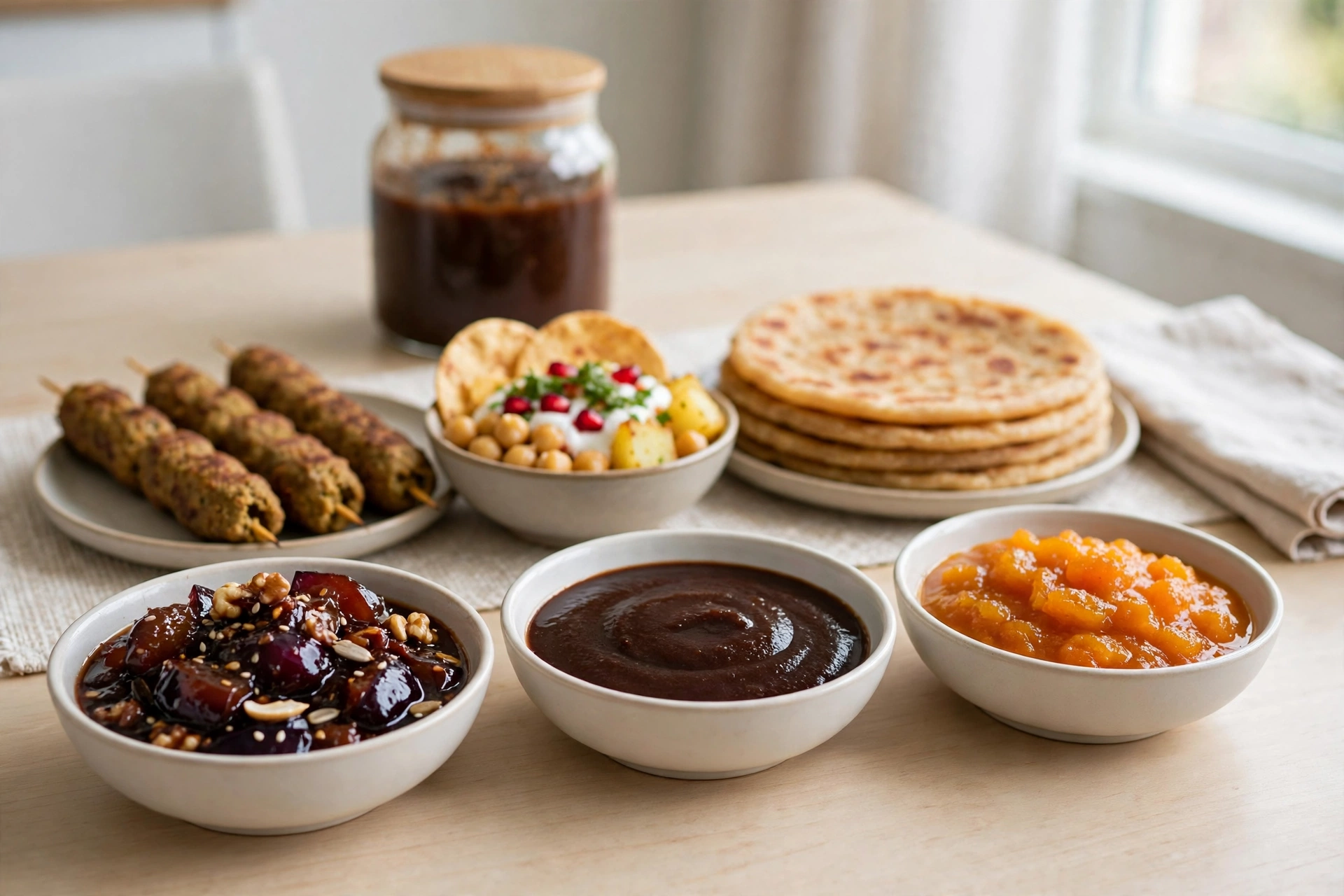
For a larger tea-time table, add a second dip, such as plain yoghurt stirred with a spoonful of plum chutney, or a simple raita. The ARONISA Trio makes this easy, because it gives you all three flavours in one set. The tamarind bowl should still be the main bowl for pakoras, because its tang is what lifts fried food best.
FAQ
How do you fry pakoras so they stay crisp? Use a thick batter, hot but not smoking oil, small batches, and drain the pakoras with space around them, so steam does not soften the crust.
Why do my pakoras turn soft after frying? They may have been fried in oil that was too cool, crowded in the pan, or piled up while still hot. Fry in batches and drain them on a rack or paper.
What chutney goes best with pakoras? A tangy tamarind chutney, such as Imli Ki Chutney, pairs well with pakoras, samosas, and other fried snacks.
A friendly next step
Try these habits at your next tea time, and serve the pakoras with Imli chutney while they are still warm and crisp. ARONISA chutneys are delivered across Pakistan, and you can find the latest details on the shop page. Start with the tamarind chutney, and keep the Trio on hand for guests who want a choice.