
How do you frost a cake smoothly at home? The answer is less about special tools and more about simple habits. A smooth cake starts with a level sponge, a thin crumb coat, and frosting that is soft enough to spread but firm enough to hold its shape. Get those three things right, and the rest is patience.
Many home bakers struggle with frosting because they try to finish in one thick layer. Crumbs drag into the frosting, the sides look patchy, and the cake ends up looking rushed even when it tastes wonderful. A slower, two-step method solves most of that. It is the kind of skill that is much easier to learn by watching and practising than by reading alone, which is why it is taught hands-on in the Desserts & Baking Course.
This guide covers the basics for a sponge layer cake: levelling, crumb coat, smoothing, and simple finishing. It is about cakes, not cupcakes — for cupcake swirls, the technique is different, and this guide keeps its focus on a smooth, even cake finish.
Start with a level, cool sponge
A smooth finish starts before the frosting comes out. Let the sponge cool completely. A warm sponge will melt buttercream and slide, no matter how carefully you spread it. Once cool, level the top if it has domed in the oven. A long, sharp knife, held level, will trim a thin slice from the top so the cake sits flat. Save the trimmings for tasting — they are a baker’s reward, not waste.
Place the first layer on a plate or cake board, flat side up if you can. Spread a small amount of frosting in the middle, then place the second layer on top. Check from the side that the layers are even. If one side is higher, gently press it down or trim a little more. A level stack makes smoothing far easier later.
Your frosting should be smooth and spreadable. Beat buttercream until it is pale and soft, but not so soft that it slumps off a spoon. Cream-cheese frosting, used on cakes such as red velvet, should be handled the same way: smooth, cool, and firm enough to hold a shape. If your kitchen is warm, work in a cool spot and return the bowl to a cool place between steps.
The crumb coat: the step most people skip
The crumb coat is a thin layer of frosting spread all over the cake, just enough to trap the crumbs. It does not need to look perfect. In fact, it will look patchy, with crumbs showing through in places. That is normal, and it is the point.
Spread the crumb coat with a palette knife or the back of a spoon, turning the plate slowly as you go. Cover the top first, then the sides, pushing frosting gently into any gaps. Then chill the cake briefly, until the crumb coat feels firm to a light touch. This firm layer locks the crumbs in place, so your final layer can stay clean and smooth.
Skipping the crumb coat is the most common reason for a crumby finish. It feels like an extra step, but it saves time in the end, because you will not be chasing crumbs through your final layer. Think of it as a base coat, like the first coat of paint on a wall.
Smooth the final layer, slowly
Now spread a generous final layer of frosting over the chilled crumb coat. Start on top, spreading outwards, then work down the sides. Hold your knife or scraper at a gentle angle and turn the plate slowly, letting the tool do the work. Do not press hard — firm pressure creates drag marks, while light, steady pressure gives a smooth surface.
If you see a ridge or a gap, add a small amount of frosting to that spot and smooth again. Work in short, calm passes rather than one long scrape. Between passes, wipe your scraper clean. A clean tool leaves a cleaner finish, and a tool loaded with old frosting will leave streaks.
For a simple, neat finish, you do not need elaborate piping. A smooth top, clean sides, and a tidy edge at the base already look like a bakery cake. If you want a little decoration, a few piped rosettes on top, or a simple border at the base, will finish it without hiding the smooth work underneath. Keep decoration simple until smoothing feels easy — a plain, well-finished cake always looks better than a busy, uneven one.
Practise, then learn in person
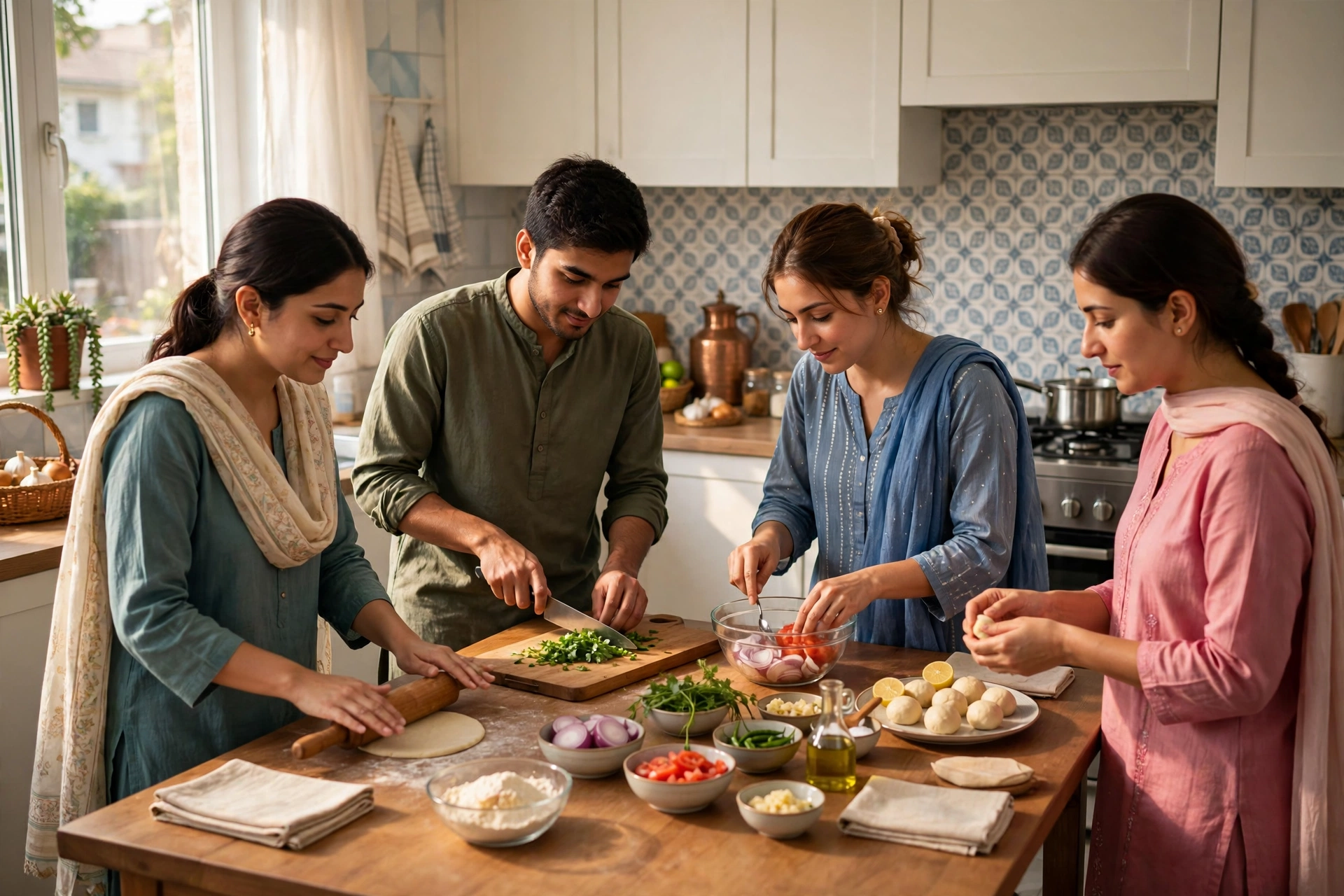
Smooth frosting improves quickly with practice, and it improves fastest when someone can watch you and correct small habits: how you hold the scraper, how much pressure you use, and when to chill the cake again. That is what hands-on learning is for.
The ARONISA Desserts & Baking Course covers baking basics, sponge and layer cakes, frosting and piping, cupcakes, brownies, kheer, gulab jamun, no-bake desserts, and cookies. Classes are in person in Rawalpindi and Islamabad, hands-on, and in small batches. You register on the website and ARONISA calls to confirm the batch, timing, and fee. See the latest details and register for a course if you would like to learn this skill in person. For a celebration cake to order, rather than bake, see the ARONISA cakes page for cakes delivered in Rawalpindi and Islamabad only.
FAQ
Why does my frosting look crumby?
Usually because there is no crumb coat, or the cake was still warm. Cool the sponge completely, apply a thin crumb coat, chill it until firm, then add the final layer.
Do I need a turntable to frost smoothly?
No, but it helps. A plate turned slowly by hand works well for a home cake. The key is slow, steady turning and a clean scraper, not expensive equipment.
Is frosting a layer cake different from frosting cupcakes?
Yes. A layer cake needs levelling, a crumb coat, and smoothing with a scraper. Cupcake frosting is about piping a swirl on a small cake, which is a different skill.
A friendly next step
Bake a simple sponge, cool it completely, and try the crumb coat method once. A smooth cake is not about talent — it is about a level sponge, a thin first coat, and a calm final pass.